SEO vs Paid Advertising in the UAE: What Should Your Business Invest In? A Real Look at SEO vs PPC Dubai
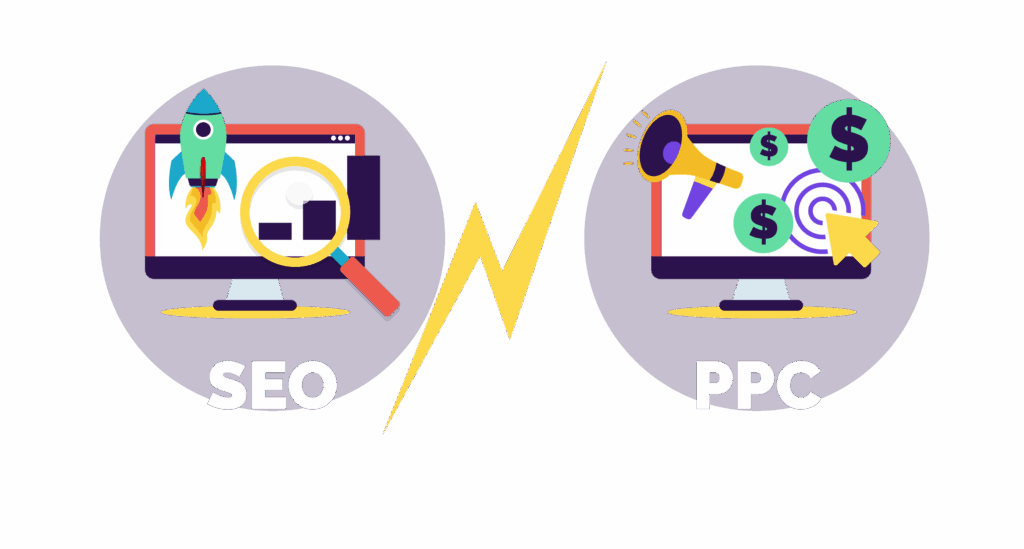
Every serious marketing conversation in the UAE eventually lands in the same place. Should the budget build visibility slowly… or buy it immediately? The tension behind SEO vs PPC Dubai decisions isn’t really about channels. It’s about timing, pressure, and how close a business is to revenue right now.
In boardrooms, the debate sounds strategic. In reality, it’s usually emotional—driven by urgency, competition, or the quiet fear of being invisible in a fast-moving market. And nowhere does that tension feel sharper than in organic search Dubai environments, where patience and speed are constantly competing for attention.
The difference between momentum and immediacy
Paid advertising delivers presence on demand. SEO builds presence that doesn’t disappear when budgets pause. That contrast sounds obvious, yet businesses rarely evaluate it honestly.
Because the real question isn’t which channel is better. It’s when each channel makes sense inside the life stage of a company.
Early-stage brands in the UAE often lean toward paid ads UAE strategies simply because waiting six months for traction feels impossible. Established brands, on the other hand, start noticing how expensive permanent urgency becomes. Neither instinct is wrong. But both become risky when treated as permanent strategy rather than temporary phase.
Buyer intent behaves differently across search types
Something subtle happens between a paid click and an organic visit. Paid traffic often arrives with comparison in mind. Organic visitors frequently arrive with trust already forming.
Not always. But often enough to shape conversion behaviour. In B2B especially, we see organic search producing quieter, slower pipelines—yet with higher decision confidence later. Paid traffic tends to move faster… and drop off faster if expectations aren’t met immediately.
This isn’t a quality judgment. It’s a rhythm difference. And rhythm matters more than channel loyalty.
The hidden alignment problem inside most UAE marketing teams
The real friction in SEO vs PPC Dubai conversations usually isn’t performance. It’s internal alignment. Marketing teams optimise for traffic. Sales teams care about readiness. Leadership looks for predictable growth.
When these definitions don’t match, both SEO and paid advertising appear underwhelming—no matter how well executed.
We’ve seen situations where:
SEO drives strong discovery but sales follow-up is slow
Paid campaigns generate leads that pricing strategy can’t convert
Reporting highlights clicks while revenue remains unclear
At that point, the channel debate becomes a distraction from the real issue: misaligned expectations across departments.
Measuring what actually matters takes longer than expected
One of the more uncomfortable truths in UAE digital strategy is how loosely success is sometimes defined. Traffic growth feels good. Lower cost per lead looks efficient. High impressions create confidence. Yet none of these alone reveal commercial impact.
This is where SEO performance metrics become meaningful—not as dashboards, but as business signals tied to pipeline, retention, and lifetime value. And the same applies to paid media. Without revenue visibility, optimisation becomes cosmetic. Numbers improve. Decisions don’t.
Why the smartest UAE brands stop choosing sides
Over time, most mature businesses move beyond the binary. Not because balance sounds sophisticated— but because real buyer journeys refuse to stay inside one channel.
A prospect might:
Discover through organic content
Return via a paid remarketing ad
Convert weeks later through direct search
Attribution rarely tells the full story. But behaviour always leaves clues. The brands that grow steadily in the UAE tend to treat SEO as infrastructure and paid media as acceleration. Different roles. Same direction.
The trade-off nobody likes to admit
Here’s the quieter reality behind the debate. SEO demands patience many organisations don’t truly have. Paid advertising demands budget discipline many organisations don’t consistently maintain.
Both require something harder than money: clarity of intent.
Without that clarity:
SEO becomes endless content without conversion
PPC becomes endless spend without learning
And the argument repeats every quarter.
A closing thought from inside real strategy conversations
In the UAE, visibility is rarely the final problem. Relevance is. Both SEO and paid advertising can create attention. Only aligned strategy turns attention into decisions.
So the question isn’t whether to choose organic or paid. It’s whether the business is ready to support whichever visibility arrives. Because in fast markets, growth rarely fails from lack of traffic. It fails when intent shows up… and nothing meaningful is waiting on the other side.